
Today in History
November 02
1889: North Dakota and South Dakota were admitted to the Union as the 39th and 40th states, respectively. The first European to reach the region was Pierre Gaultier de Varennes, sieur de La Vérendrye, a French-Canadian fur trader and explorer who, in 1738, led an expedition to what is present-day North Dakota. In 1742 and 1743, two of his sons, Louis-Joseph and François de La Vérendrye, returned to the territory and ultimately reached present-day Fort Pierre, in the center of South Dakota, where they buried a lead plate as a marker for their mission. At that time, at least eight Native American tribes populated the vicinity including the Mandan, Arikara, Hidatsa, Assiniboin, Crow, Cheyenne, Cree, and the Dakota (Santee Sioux). Other than through fur trapping, exploration of the Dakotas by European Americans was practically nonexistent prior to the 1803 Louisiana Purchase. In 1804, the Lewis and Clark expedition wintered in present-day North Dakota. (Source: Library of Congress)
STAY CURRENT

Beta-Carotene: a Pumpkin Power Pigment
Editor's Note: When asked, many people will say fall is their favorite season of the year. I am one of them. The crisp fall...
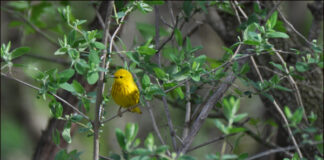
Birds of a Feather – Bird Together
Editor's Note (Oct. 8, 2026): Many years ago I decided to cover The Big Sit, an event at a national wildlife refuge in which...
SCIENCE IN HISTORY
Beta-Carotene: a Pumpkin Power Pigment
Editor's Note: When asked, many people will say fall is their favorite season of the year. I am one of them. The crisp fall...

Pathfinder Pilot Recalls D-Day
Editor's Note: In May 2019 I traveled to Oxford, Connecticut for media day hosted by the D-Day Squadron as they prepared to depart to...

See the Forest AND the Trees at Redwood National Park
Editor's Note: In 2015, I visited a redwood forest in northern California for the first time. Before arriving at the edge of the forest,...

Take a Hike – Into a Cauldron!
Editor's Note: In 2015, I visited Lassen Volcanic National Park in northern California. Its history is the history of the National Park Service because...

Glass: a Hot and Cool Combo of Art and Science
Editor's note: One of the hottest and coolest stories I have covered was my 2016 visit to the Toledo Museum of Art's Glass Pavilion...

Sneakers Have Soles – and Soul
Editor's note: In December 2015 I learned of a new exhibit at the Toledo Museum of Art - The Rise of Sneaker Culture. Curated...
RECOMMENDED READING

Book Recommendation: Code Girls by Liza Mundy
Oct. 12, 2026 - Code Girls: the Untold Story of the American Women Code Breakers of World...

Nancy Love: WASP Pilot
May 22, 2026 - Nancy Love: WASP Pilot by Sarah Byrn Rickman (2019) is the story of...

Book Recommendation: The Berlin Candy Bomber
March 20, 2026 - The Berlin Candy Bomber by Gail Halvorsen (2010, 244 pages) is Halvorsen's autobiography...