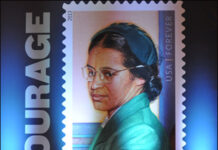
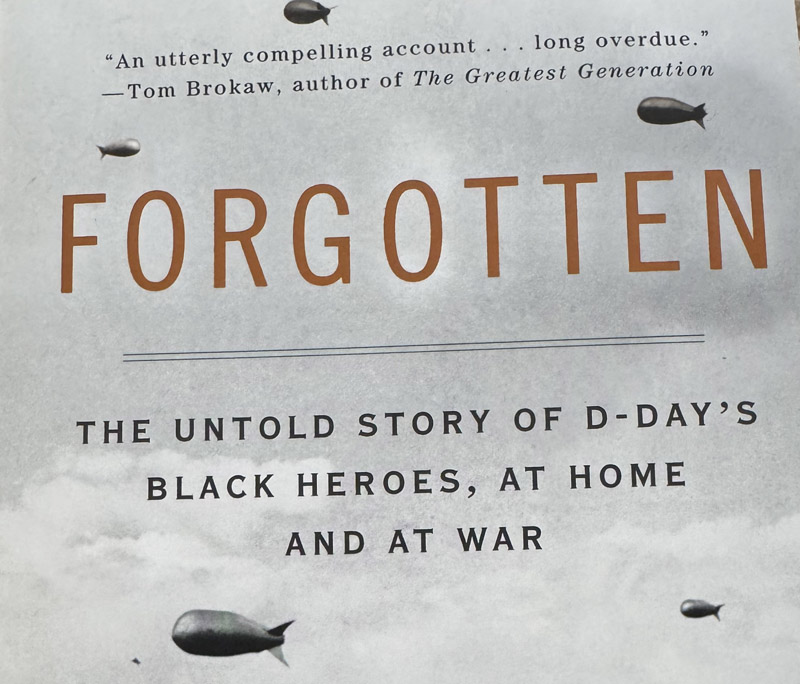
Editor’s note: I have read more than 30 books on the people of World War II. Their stories are a timeless inspiration for present and future generations. In 2019 as the 75th anniversary of D-Day approached, I read a book about the 320th Barrage Balloon Battalion, which was comprised of all African American soldiers, about 700 in total. Published in 2016, Forgotten: The Untold Story of D-Day’s Back Heroes, at Home and at War was written by Linda Hervieux. The 320th was the only battalion of all Black soldiers to land on the Normandy beaches on D-Day – June 6, 1944. Linda’s book is a must read. It is included in my WWII Annotated Bibliography, which can be accessed and downloaded in the Resources section of this website. Below is my 2019 story that I wrote about Linda’s book and the soldiers. It has been updated and edited.
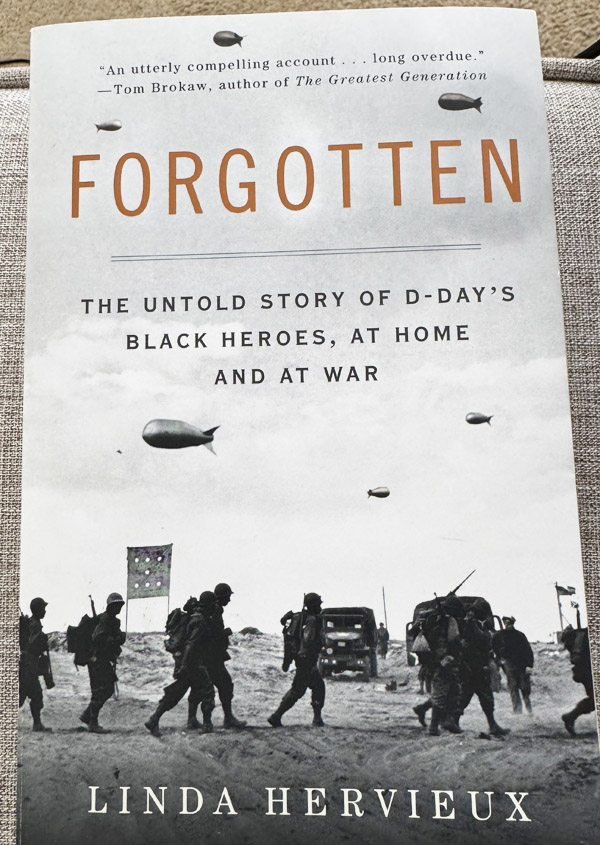
Jan. 30, 2026 – The brave men of the 320th Barrage Balloon Battalion, the only unit of African American soldiers to land on Omaha Beach on D-Day, were lost to history until 2016 when Linda Hervieux, author, told their story in her book, Forgotten: The Untold Story of D-Day’s Black Heroes, At Home and At War.
Double Victory
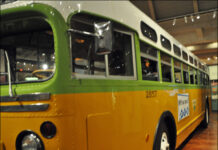
It is not possible to read Linda’s book without feeling outrage at the manner in which these heroes were treated before, during, and after World War II. They were American and Black heroes. For decades, pervasive Jim Crow laws in the South created a segregated and unequal society that made it exceedingly difficult, if not impossible, for African Americans to thrive or even strive to achieve their goals and dreams.
Yet when the United States entered World War II in 1941, young Black men enlisted in the military to serve their country in a time of need. Together with those who were drafted, about one million African American men served admirably and with distinction. The irony was always front and center though. How could America expect Black soldiers to fight to free Europe from the claws of Nazi oppression and racism when they were not free in their own country facing those injustices? It’s outrageous more people were not outraged by this situation in 1941.
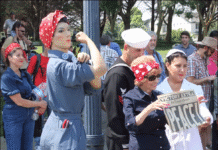
And thousands of Black women volunteered to serve in the U.S. Army’s Women’s Auxiliary Army Corps, the WACs, during WWII.
During World War II (1941-1945 for the United States), the African American community was fighting for a Double Victory – victory over Germany abroad and victory over Jim Crow at home. Everyone at the time knew what Double V meant. Surely after African Americans distinguished themselves fighting overseas they would come home heroes with full integration into American society. Sadly, that would not be the case. Jim Crow society was rooted so deeply, it would take years before discriminatory laws and practices were ruled unconstitutional. However, for those serving in the military, on July 26, 1948, then President Harry S. Truman issued Executive Order 9981. It ordered all branches of the military not to discriminate on the basis of race, color, religion or national origin. Separate units for African American military personnel were disbanded, never to return.
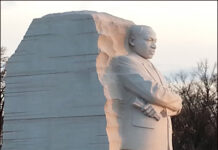
By telling the story of the 320th Barrage Balloon Battalion, Linda gives her readers important lessons not only about D-Day but also about the struggle for civil rights in America in the 20th century. A key turning point in that struggle was the March on Washington for Jobs and Freedom in 1963 during which Dr. Martin Luther King, Jr., the Father of the Civil Rights Movement, called on the country to honor the promises made in the Declaration of Independence and the Bill of Rights. His speech that day in front of the Lincoln Memorial is one of the most famous speeches in American history – I Have a Dream. To listen to the speech or read a transcript, click here.
In 1964, Congress passed the Civil Rights Act and one year later, the Voting Rights Act.
In her book, Linda includes a few pages of photos. One is a photo of Lt. Col. Leon J. Reed, 320th Battalion commander who was White. Linda’s caption on the photo reads: “Lt. Col. Leon J. Reed was the commanding officer of the 320th Barrage Balloon Battalion. Though he hailed from South Carolina and attended the Citadel, Reed broke from southern tradition by treating the black men under his command with respect. In the words of one soldier, he was “a hell of a fine fellow.”
There were Black units who served during World War I (1914-1918) in the early 20th century but after the war, units were disbanded. World War I was supposed to be the war that ended all wars but instead, harsh terms of the Treaty of Versailles that ended WWI, provided the fuel for the rise of Adolf Hitler and Nazi Germany.
President Franklin D. Roosevelt (FDR) recognized growing tensions in Europe in the late 1930s and took steps to build up American forces even before Japan attacked the U.S. Naval Base at Pearl Harbor in Hawaii on Dec. 7, 1941.
Before Pearl Harbor, there was a fierce debate in the country about staying neutral in the war that exploded in 1939. Germany invaded Poland and then marched through Europe in 1940 occupying previously sovereign countries. France, Denmark, Belgium, and Holland fell quickly.
Many Americans did not want to send supplies and equipment to England as the British fought off Germany. The English Channel separating England from Europe was their savior. Hitler did not attempt a land invasion of England. He tried to bomb the British into submission but England, under the stalwart guidance of Prime Minister Winston Churchill, resisted.
Pearl Harbor – Dec. 7, 1941
The Pearl Harbor attack changed the course of history. On that day, a beautiful Sunday morning, Japanese naval and air forces attacked Pearl Harbor, the main United States naval base for its Pacific fleet. In 1941, Hawaii was not a state but a United States Territory. After the attack, Americans united under their leaders who declared war on Japan and then on Germany. Millions of soldiers enlisted and were drafted. Private sector companies were soon producing airplanes, tanks, ships, and vehicles in record numbers in record time. Women went to work in factories when men went off to war.
While most African American units served in support roles to keep troops fed and supplied with equipment, the 320th Barrage Battalion was trained for a vital role on D-Day.
Their mission was to protect the landing force from attack by German aircraft. The 320th landed on D-Day and in the month of June raised 143 barrage balloons protecting the coast. The balloons were raised to 1,000 to 2,000 feet with a cable attached to the ground. The wings of low flying aircraft would be ensnared in the cable and then a bomb attached at the bottom of the balloon would explode. The balloon’s value was also one of deterrence as enemy pilots made sure to avoid flying near the balloons.
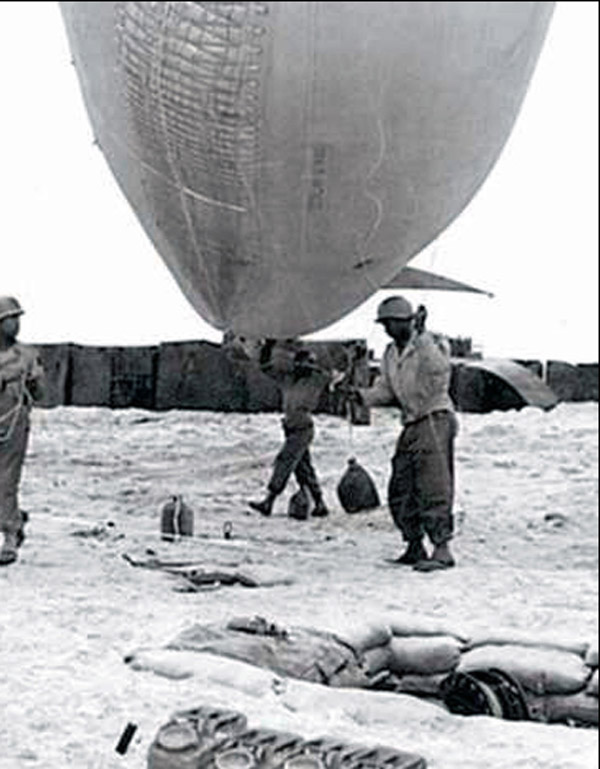
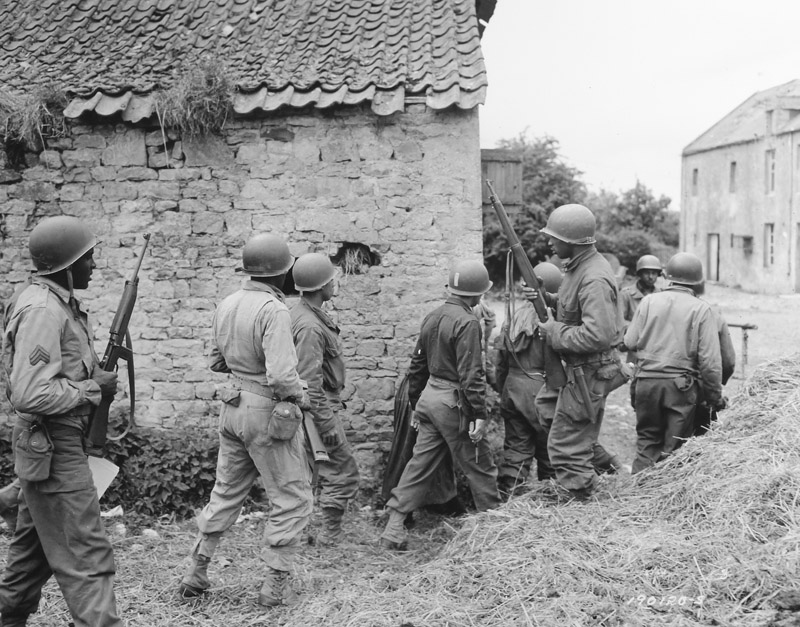
The 320th served admirably and with distinction even being deployed to help clear German snipers from the areas around the Normandy beaches where the invasion took place. While in England, they experienced an integrated society during their training in England. Local British citizens welcomed Black soldiers with open arms giving them freedoms they did not enjoy at home. Some chose to remain and live in England after the war.
They returned home to America having defeated Nazi Germany but not Jim Crow. It would be another ten years before Jim Crow laws were declared unconstitutional.
The 6888th Central Postal Directory Battalion
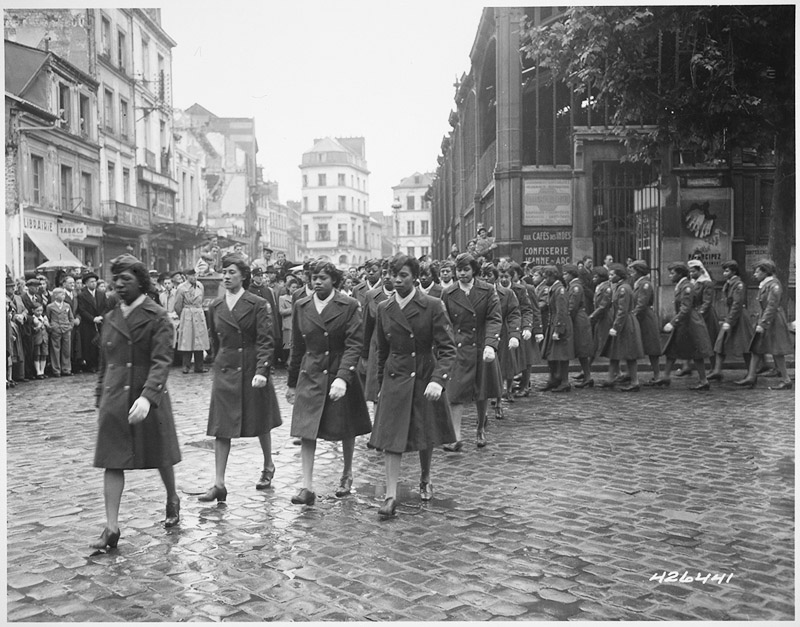
Within the Women’s Auxiliary Army Corps (the WAC formed in May 1941), the 6888th Central Postal Directory Battalion was comprised of hundreds of Black, Hispanic and Puerto Rican women who volunteered to serve during World War II. It was the only battalion of Black and minority women to deploy overseas during the war. They were tasked with clearing a backlog of millions of pieces of mail for delivery to soldiers and sailors serving around the world. For more information, visit the Six Triple Eight at the National Archives.