

June 6, 2021 – On this day 77 years ago, the largest air and sea invasion ever attempted, called D-Day, took place along 50 miles of the Normandy, France coast. Its purpose was to liberate western Europe from Nazi occupation. The Allies (primarily the United States, England and Canada) sought to defeat the Axis Powers (Nazi Germany, Imperial Japan and Italy). The Axis Powers wanted to create a new world order and dominate it. Nazi Germany invaded and occupied many previously sovereign countries in western Europe. D-Day launched the Allied offensive to liberate those countries. Gen. Dwight D. Eisenhower, the Supreme Allied Commander, did not have a Plan B if the D-Day invasion failed. It did not fail.
(Note: Read the Story Snapshot above for a brief history of the years before WWII began in 1939.)
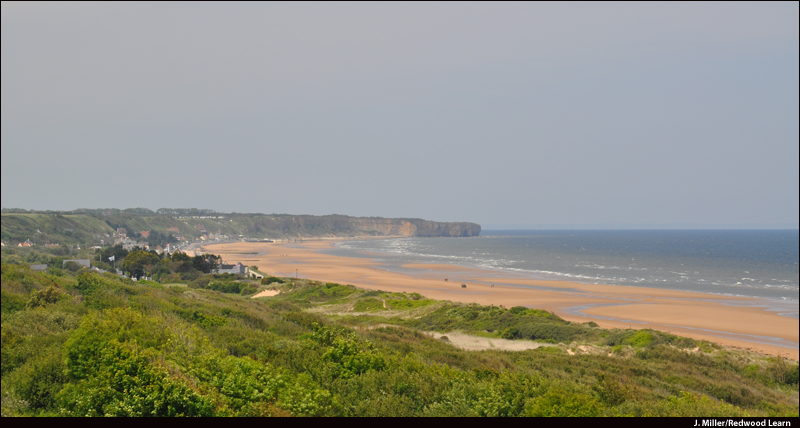
D-Day: June 6, 1944
More than 160,000 troops stormed the beaches of Normandy, France on and after D-Day on June 6, 1944. About 13,000 Allied aircraft participated. Thousands of paratroopers dropped from the skies behind enemy lines. And more than 5.000 ships were needed to transport soldiers to the beaches and carry essential supplies. Gen. James “Jimmy” Doolittle’s job was to ensure Allied air superiorty on D-Day. He planned thousands of missions before D-Day to disrupt the German air force, the Luftwaffe. Bombing missions were directed to take out air fields, railroad tracks used for transportation and oil refineries. On D-Day, Doolittle flew over the beaches to assess whether the Allies had achieved their goal. He reported back to Gen. Eisenhower that in fact, the Luftwaffe was not a factor. The Allies had achieved their goal for air superiority.
One of the best ways to learn about D-Day is to read primary source accounts of the day.The following is a list of primary source books Redwood Learn recommends after reading these books.
1. Every Man a Hero: A Memoir of D-Day, The First Wave at Omaha Beach and a World at War by Ray Lambert and Jim DeFelice. (2019)
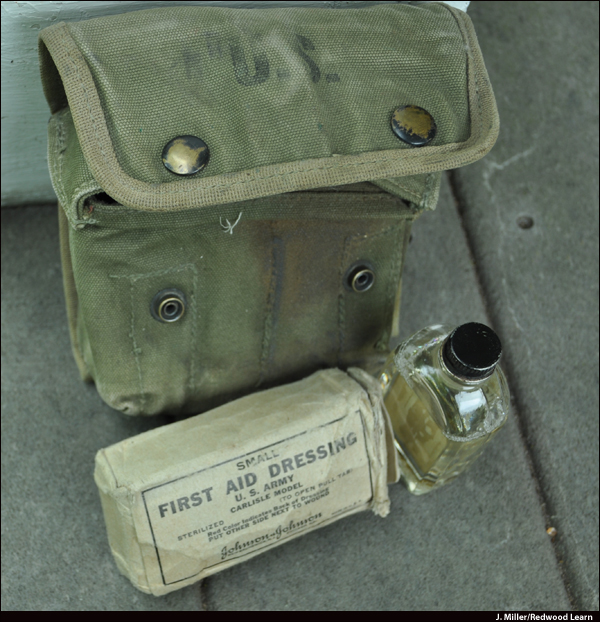
Ray Lambert was an Army medic who landed on Omaha Beach on D-Day. Bill Lambert, his brother, was also an Army medic who landed on Omaha Beach on D-Day. Ray was in charge of 30 other medics in the 16th Infantry Regiment. He had already served in North Africa and Sicily. But neither training nor experience could have prepared him for D-Day. Trapped underwater below a landing craft door that hit his back, Ray survived when the boat suddenly moved. On a ship evacuating him and other wounded soldiers back to England, he learned his brother was also on the ship with very serious injuries. The book is an excellent primary source account of D-Day.
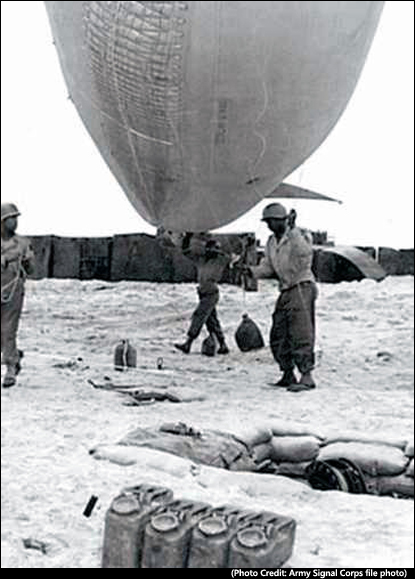
2. Forgotten: The Untold Story of D-Day’s Black Heroes, at Home and at War by Linda Hervieux (2015)
Douglas Brinkley wrote that every American should read Linda’s book. The book is as much a history of the American civil rights movement as it is about the African American Barrage Balloon Battalion, the only unit of African American soldiers to land on D-Day. Readers will be angry at the way these heroes were treated after returning from fighting to free Europe from Nazi oppression and racism only to face it themselves at home. While training in England, Black soldiers were treated with respect as Americans. They experienced freedoms they never had before in the United States. About one million African American soldiers served during WWII.
An excellent companion to this book is Braided in Fire by Solace Wales that tells the story of Lt. John Fox, an African American soldier killed on Dec. 26, 1944 in Italy. He was posthumously awarded the Medal of Honor in 1997.
3. The Mold in Dr. Florey’s Coat: The Story of the Penicillin Miracle by Eric Lax. (2005)
The second highest priority for the U.S. Army in 1944 was the mass production of penicillin so thousands of doses would be available on and after the D-Day invasion. First discovered in London by Alexander Fleming in 1928, he abandoned his research because he could never produce enough of the substance from the Penicillium mold. Just before the outbreak of WWII in the late 1930s, other researchers in London took up the research. Working collaboratively with American scientists, they found a strain of the mold that produced high yields of penicillin. By D-Day, medics and doctors had penicillin available to them. In the June 5, 1944 issue of LIFE magazine, Squibb advertised penicillin to the public. The antibiotic saved thousands of soldiers’ lives.

After D-Day
After D-Day, the Allies methodically pushed back the Germans but it took until May 1945 for the war to end in Europe. Paris was liberated in August 1944 after D-Day but in December 1944, the Germans launched their last major offensive in Belgium. The battle has come to be known as the Battle of the Bulge. The Allies prevailed even though in the early days of the battle, German soldiers surrounded Allied soldiers in Bastogne and the surrounding area. Gen. Patton rushed to Belgium with his Third Army to reinforce the Allies. The Germans never took control of Bastogne.
REVIEW QUESTIONS
1. What was the purpose of the Allied D-Day invasion?
2. When did the D-Day invasion occur?
3. What three countries were the Allies?
4. What three countries were the Axis Powers? What was their goal?
5. What medicine saved thousands of soldiers’ lives on D-Day and in the weeks/months after the invasion?
6. What was the Barrage Balloon Battalion?
INQUIRY QUESTIONS
1. What might have happened if the D-Day invasion had failed?
2. What was the scale of the D-Day invasion?