

Feb. 1, 2021 – Sixty-one years ago today at a lunch counter in a F.W. Woolworth store in Greensboro, North Carolina, the ‘Greensboro Four’ advanced a nascent civil rights movement by simply sitting to end segregation and discrimination. The ‘Greensboro Four’ were four college students attending North Carolina A & T in Greensboro. Joseph McNeil, Franklin McCain, Ezell Blair Jr. (later Jibreel Khazan) and David Richmond stayed awake most of the night before planning their peaceful protest.
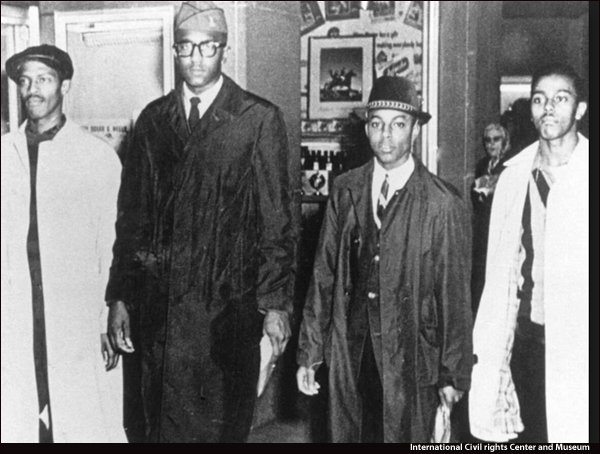
Joseph McNeil (Photo: International Civil Rights Center and Museum)
After purchasing items at the store, they sat down at the whites-only lunch counter knowing it was a provocative action. African Americans were allowed to take out food but could not sit and eat at the counter. They ordered lunch and were refused service so they refused to leave the counter. The store manager called the police chief. When the police chief arrived, he said there was nothing he could do as long as the four men sat there quietly. The store closed early and the Greensboro Four left. The next day more than 20 of their friends went to the store and sat at the lunch counter.
Word spread of their peaceful protest. Soon African Americans began sitting at lunch counters at other Woolworth stores in North Carolina. And then it spread nationwide to 55 cities in 13 states.
On July 25, 1960, Woolworth ended its whites-only policy at their lunch counters. The first African Americans to sit at the Greensboro counter were Woolworth employees. In the first week, 300 African Americans sat at the counter. The ‘Greensboro Four’ had significantly advanced the Civil Rights Movement.
Reflecting on their action later, Jibreel Khazan said: “We didn’t want to set the world on fire. We just wanted to eat.” This information is from the North Carolina Museum of History.
Edna Griffin and Rosa Parks
Before the Greensboro Four, other sit-ins had taken place to protest Jim Crow laws that discriminated against African Americans. Most notably, in 1947, Edna Griffin sat at a counter in a drug store in downtown Des Moines, Iowa after being refused service. She was incensed at the discrimination as she had served her country during World War II. She filed a lawsuit against the store owner and won $1 in damages. But she had won her case and helped to advance the Civil Rights Movement.
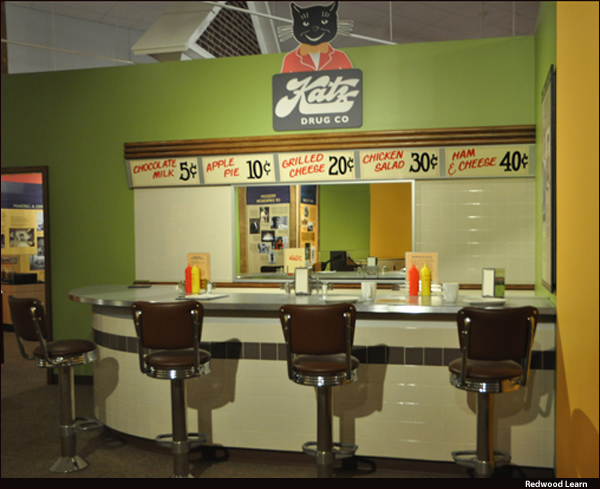
African American Museum of Iowa in Cedar Rapids. (Photo: Redwood Learn)
On Dec. 1, 1955, Rosa Parks, a seamstress and civil rights activist, sat in her seat on a Montgomery, Alabama city bus when ordered by the bus driver to give her seat to a white passenger. She was sitting in the assigned seats for Blacks in the back of the bus. She was tired of the humiliation and discrimination. She decided it was time to act. She refused to move. She was arrested, paid a fine and was released.
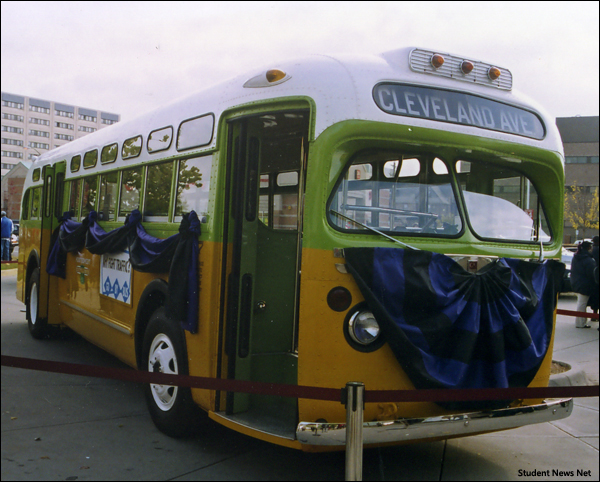
HIstory in Detroit for one of Rosa’s memorial services upon her death.
(Photo: Redwood Learn)
Dr. Martin Luther King, Jr. came to Montgomery to help organize the Montgomery Bus Boycott following Rosa’s arrest. The boycott lasted for more than one year. The Supreme Court eventually ruled it was unconstitutional to segregate people on city buses based on race so Montgomery changed their policy in December 1956. The boycott ended.
In 1964, Congress passed the Civil Rights Act. President Lyndon Johnson signed it into law but the struggle for civil rights continued. On April 4, 1968, Dr. King was assassinated in Memphis, Tennessee where he was helping sanitation workers who were on strike for better working conditions.
REVIEW QUESTIONS
1. Who were the ‘Greensboro Four?’
2. When and where did they take action to protest segregation and discrimination against African Americans?
3. Name two other people who sat in seats to protest segregation and discrimination.
INQUIRY QUESTIONS
1. What was the result of the action taken by the ‘Greensboro Four?’
2. How did the peaceful protests by the ‘Greensboro Four,’ Edna Griffin, and Rosa Parks advance the Civil Rights Movement? What did their actions have in common?
3. Why are these men and women still an inspiration today?
4. Create a timeline of the peaceful protests and key events in the Civil Rights Movement.