

April 14, 2021 – On this day in 1865, President Abraham Lincoln, the nation’s 16th president, was assassinated as he watched a play from a private box at Ford’s Theatre in Washington, D.C., the nation’s capital.
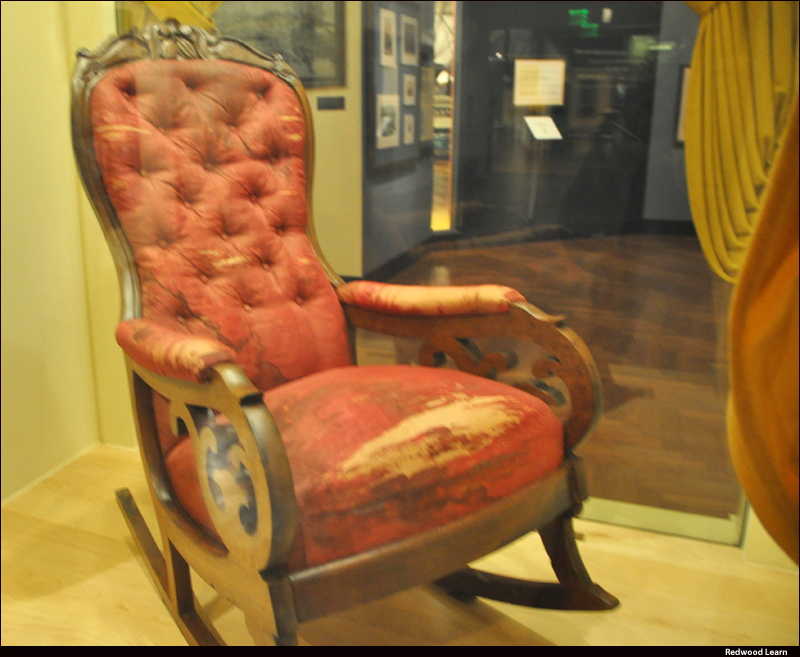
Lincoln had just been inaugurated on March 4, 1865 to his second term as president. During his first term, he had guided the nation through the American Civil War that almost tore the country apart.
Lincoln’s first term (1861-1865)
His entire first term of office was consumed with the bloody Civil War, which began soon after Lincoln was inaugurated for his first term.
Several Southern states seceded from the Union when Lincoln was elected in November 1860. Lincoln was an abolitionist. He vehemently opposed slavery and in a famous speech before the 1860 election, he said a nation divided could not stand. Once elected president and war broke out between northern states (Union) and southern states (Confederates), Lincoln did not waiver from his belief that slavery had to be abolished.
When the war dragged on, he issued a preliminary Emancipation Proclamation on Sept. 22, 1862. He proclaimed that if the states that had seceded (the “rebellious” states) did not stop fighting, all slaves in the rebellious states would be freed. Fighting did not stop so on Jan. 1, 1863, Lincoln issued his formal Emancipation Proclamation. Many freed slaves joined the Union Army (Army of the Potomac) to fight in the Civil War.
According to the Department of Veterans Affairs (VA), there were 2.2 million Union soldiers who fought during the Civil War. Of that number, 140,414 died in battle. About one million men fought as Confederate soldiers. Of that number, 74,524 died in battle.
On April 9, 1865, Confederate Gen. Robert E. Lee surrendered his Army of Northern Virginia (Confederates) to Union Gen. Ulysses S. Grant at the McLean House in Appomattox Court House, Virginia.
Timeline Review
March 4, 1861: Abraham Lincoln was inaugurated to his first term as President of the United States.
April 12, 1861: The first shots in the Americaqn Civil War were fired when Confederate soldiers fired on Fort Sumter, South Carolina.
Sept. 22, 1862: President Lincoln issued the prelilminary Emancipation Proclamation to free all slaves in “rebellious” state (states that seceded from the Union).
Jan. 1, 1863: President Lincoln issued the Emancipation Proclamation when the “rebellious” states did not stop fighting.
March 4, 1865: President Lincoln was inaugurated to his second term.
April 9, 1865: The Civil War ended when the Confederates surrendered to the Union at Appomattox Court House, Virginia.
April 14, 1865: John Wilkes Booth shot President Lincoln in the back of the head as President Lincoln watched a play at Ford’s Theatre. He died the next morning in a house across the street from the theatre. Lincoln was the first U.S. president assassinated.
Lincoln’s Second Inaugural Address (March 4, 1865)
President Lincoln’s second inaugural address is often mentioned as one of his best speeches, along with the speech he gave on Nov. 19, 1863 at the dedication of the cemetery at Gettysburg, Pennsylvania. His “Gettysburg Address” was short but is considered one of the most powerful speeches delivered by any president.
To read and listen (5 minutes) to President Lincoln’s Second Inaugural Address, visit the National Park Service.
Review Questions
1. Where and when was President Lincoln assassinated?
2. Was President Lincoln serving his first or second term as president when he was assassinated?
3. When did the American Civil War begin?
4. Why did southern states secede from the Union?
5. What did Lincoln say about a nation divided?
Inquiry Questions
1. When did the American Civil War end and what did that mean for southern states?
2. How did Lincoln’s firm beliefs as an abolitionist allow the nation to remain the United States of America?
3. Why are Lincoln’s second inaugural address and his Gettysburg Address considered two of the best speeches in American history?