

Feb. 28, 2021 – Walking through a forest of massive redwood trees at Redwood National and State Parks in northern California, visitors are ready at any moment to bump into Hagrid, Harry Potter, or Hermione but hopefully, not Lord Voldemort. The forest is magical, a tad eerie, and amazingly peaceful. It’s the perfect place to get away from it all.
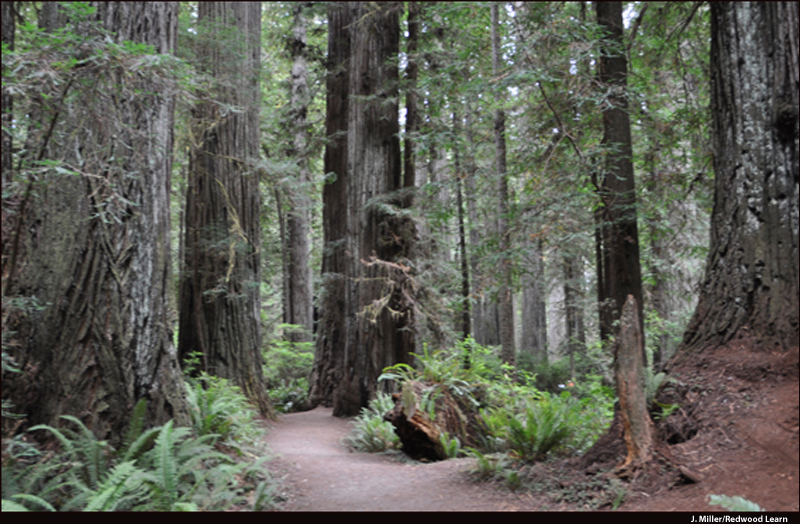
Redwoods (tallest trees in the world)
Redwoods are the world’s tallest living trees reaching heights taller than the Statue of Liberty. With its pedestal, the Statue of Liberty soars 305 feet into the air in New York Harbor. Thousands of miles away along the coast of northern California and into southwest Oregon, redwood trees can reach heights up to almost 400 feet although many are between 250 and 300 feet.
According to the National Park Service, redwood forests once covered two million acres of land in the west coast. In the mid-1800s as the Gold Rush waned, people began logging as a way to earn a living. Thousands of acres of redwood trees were cut down. The wood was used to build homes and businesses.
In the 1920s, the state of California preserved some redwood forests, also called groves. In 1968, Congress authorized the creation of Redwood National Park within the National Park Service (NPS). The designation as a national park not only protected the redwoods but also wildlife.
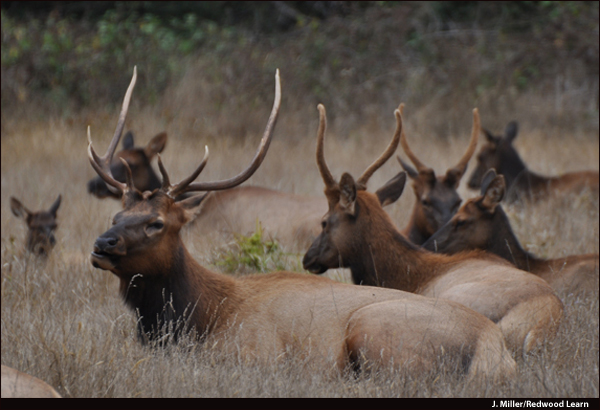
Wildlife includes wild herds of elk, large mammals that can weigh 1,000 pounds. The redwood forests provide ideal cover and shade but the animals prefer large open prairie land, land that is found adjacent to the forest.
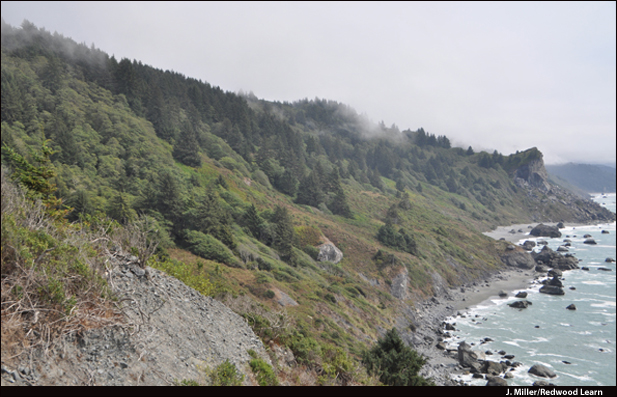
With the state of California a partner, today Redwood National and State Parks protect nearly 40,000 acres of ancient forest, which is about one-half of all redwood forest acreage left, according to NPS.
What is the difference between a redwood and a giant sequoia tree?
Redwood trees have their roots in the days when dinosaurs roamed the Earth in the Jurassic Period more than 145 millions years ago. Fossil evidence has been examined to determine that redwood trees descended from a group of conifers. These conifers were found around the world in what is now Europe, Asia, and North America.
As climate changed, redwoods thrived in three distinct geographic areas as three species. Those are:
1) Dawn redwood (Metasequoia glyptostroboides): This species was thought to be extinct but was discovered living in central China in 1944. The tree grows to a height of 140 feet with a diameter of 6 feet.
2) Giant Sequoia (Sequoiadendron giganteum): The giant sequoia is a massive, quick-growing tree with a long life span. Some giant sequoia trees can live more than 3,000 years. It’s also a tall tree with a height up to 314 feet. The most massive tree on Earth is the General Sherman Tree, a giant sequoia, in Sequoia National Park in central California. Charles Young, the first African American NPS superintendent, was in charge of Sequoia National Park in the early 1900s while he was an officer in the U.S. Army. Commanding his regiment of Buffalo Soldiers, they built roads, created maps, extinguished fires, drove out trespassing livestock, monitored tourists and kept poachers and loggers from killing wildlife and cutting down trees at the park.
3) Coast redwood (Sequoia sempervirens): Coast redwoods are the tallest trees in the world with some reaching heights of 379 feet. Its bark is one foot thick making it resistant to fire and insects. Winter rain and fog from the Pacific Ocean keeps the trees moist, even during droughts. The tree is unusual in that it can reproduce by seed or by sprout.
Redwoods have roots that only penetrate 10 to 13 feet deep into the ground but spread out from 60 to 80 feet.
Ferns form a blanket in the forest
Along with the majestic, massive redwoods, bright green ferns create a green carpet around the trees. According to the U.S. Fish and Wildlife Service, the sword fern is one of the most common ferns in forests. The leaves are called fronds and roots are called rhizomes. Ferns served many practical purposes for early settlers who used the ferns for cooking and bedding. The rhizomes were harvested, baked and eaten like a potato.
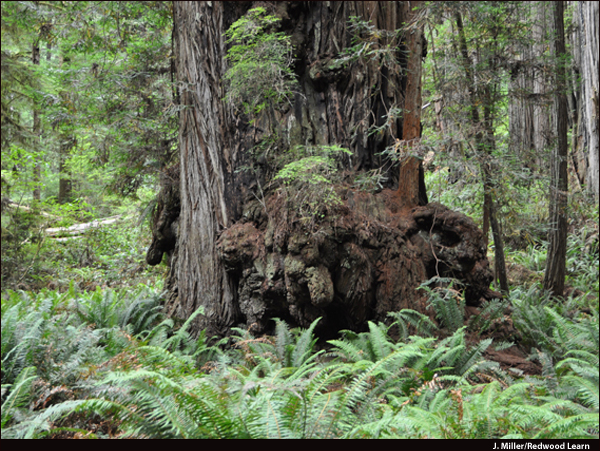
Although the open land is not quite suitable for a game of Quidditch, the forest holds secrets from thousands of years ago. Hagrid could be just around the next massive, magical redwood tending to the grounds for generations to come!
REVIEW QUESTIONS
1. How tall can a redwood tree grow?
2. How many acres of redwood forest in California are protected by a federal, state and local partnership?
3. What fraction of the total number of acres of redwood trees is protected by the partnership mentioned above?
4. Why are redwood trees resistant to disease and wildfires?
5. Convert 1,000 pounds to tons.
INQUIRY QUESTIONS
1. What is a temperate climate and how is it beneficial to redwood trees?
2. What are the main differences between the three types of redwood trees?
3. How will the redwood forests continue to be protected?