

June 27, 2023 – The decision by American colonists in 1776 to reject British rule was not an impulsive one. Tensions had been brewing for years over England’s imposition of taxes on colonists to fund their foreign wars. On July 4, 1776, American colonists declared their independence.
In December 1773, three years before the Declaration of Independence, tensions were brewing between the American colonies and the British Parliament. But tea was not brewing following the colonists’ bold action to protest British taxes imposed without any input from the American colonies. On Dec. 16, 1773, members of the Sons of Liberty in Boston, a group of colonists who supported splitting from England, boarded a ship and dumped the entire load of tea into the water. Called the Boston Tea Party, it was a pivotal moment in the fight for independence. England hardened its rule on the colonies. Colonists began stockpiling weapons and ammunition in anticipation of war with England.
On April 19, 1775, tensions finally boiled over in Lexington and Concord, Massachusetts when “the shots heard around the world” marked the beginning of the American Revolution. The war would drag on for years but America finally became an independent, soverign nation when England signed the Treaty of Paris in 1783 to end the war.
On July 4, 2023, the United States of America will celebrate 247 years of independence from England (Britain). On July 4, 1776 in Philadelphia, the Continental Congress adopted the Declaration of Independence. The vote to adopt the founding document took place in the Assembly Room at the Pennsylvania State House. The document stated 27 grievances, called Facts, colonists had against British rule.
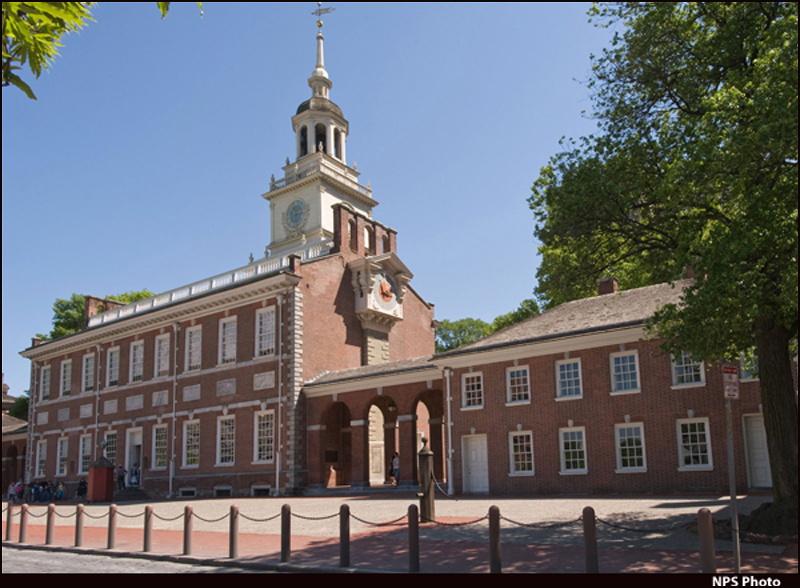
Those grievances formed the justification for American colonists to declare America would no longer be under British rule.
One of the best ways to summarize the events that led to the American Revolution (1775-1783) is to study a timeline of key events. Below are 13 highlights from the 11 years (1765-1776) before July 4, 1776. In the 18th and 19th centuries, the British Empire was very powerful and ruled land around the world. It was a parliamentary constitutional monarchy. King George III led the monarchy. But he worked closely with British Parliament to govern the American colonies. Colonists in America grew angry at being governed from England without any voice (representation).
TIMELINE OF KEY EVENTS
1.1765: British Parliament passed the Stamp Act. All official documents used in the American colonies had to have a stamp purchased from the British. Colonists were upset they did not have input into the vote by the British Parliament to impose the tax.
2. 1766: The Stamp Act was repealed but the British Parliament retained authority over the American colonies.
3. 1767: British Parliament levied new taxes on many goods from Britain, including tea. Some American colonists began boycotting British goods.
4. 1769: Worried about rebels in the American colonies, British Parliament put the Treason Act of 1543 back into effect.
5. 1770: When colonists protested British troops being sent to Boston, British soldiers opened fire and civilians were killed. This event became known as the Boston Massacre. British Parliament ended all taxes except on tea.
6. 1772: To communicate with rebel Patriots in all Thirteen Colonies, Samuel Adams from Boston set up “Committees of Correspondence.” It can be thought of as the first social network!
7. 1773: To protect the British East India Company, a trading company, British Parliament waived export taxes but levied import taxes on tea delivered to the American colonies. On Dec. 16, 1773, Samuel Adams and others boarded three ships docked in Boston Harbor. They dumped an entire shipment of tea (about 45 tons) into the water. More than 100 people took part in the three-hour protest action. The event became known as the Boston Tea Party.

8. 1774-1775: Outraged by the action, the British Parliament passed the Coercive Acts, also called the Intolerable Acts, which were four laws that placed severe restrictions on colonists in Massachusetts. The Boston port was closed until colonists paid for the tea dumped into the water. In addition, one law gave British troops the right to move into any citizen’s house without their permission. Colonists were angry and began assembling militias outside of Boston.
9. February 1775: British Parliament declared Massachusetts was in a “state of rebellion.” British troops were given the authority to arrest protest leaders.
10. April 19, 1775: After Paul Revere took his famous midnight ride to Lexington, Massachusetts to warn John Hancock and Samuel Adams the British were coming to arrest them, the Revolutionary War began in Lexington and Concord with “shots heard around the world.” British soldiers were ordered to destroy ammunition and guns being stockpiled by the Patriots. There was not a written order to arrest Hancock and Adams but the Patriots believed that was another intention of the British troops, called redcoats.
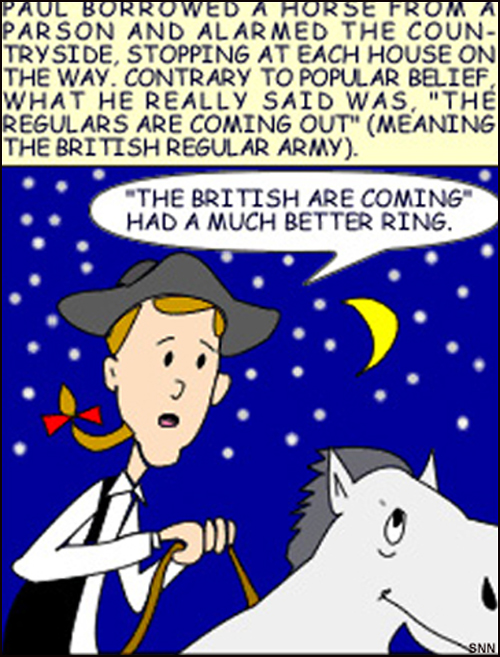
11. June 17, 1775: The Battle of Bunker Hill took place in Boston. British redcoats won the battle but they suffered about 1,000 casualties (wounded and killed). The American Patriots proved they were willing to fiercely fight British rule. One of the most famous quotes from the Revolutionary War is linked to this battle although historians still debate its origins. The quote – “Don’t fire till you see the whites of their eyes” – was likely referring to the Americans not having enough gunpowder and being told to conserve it.
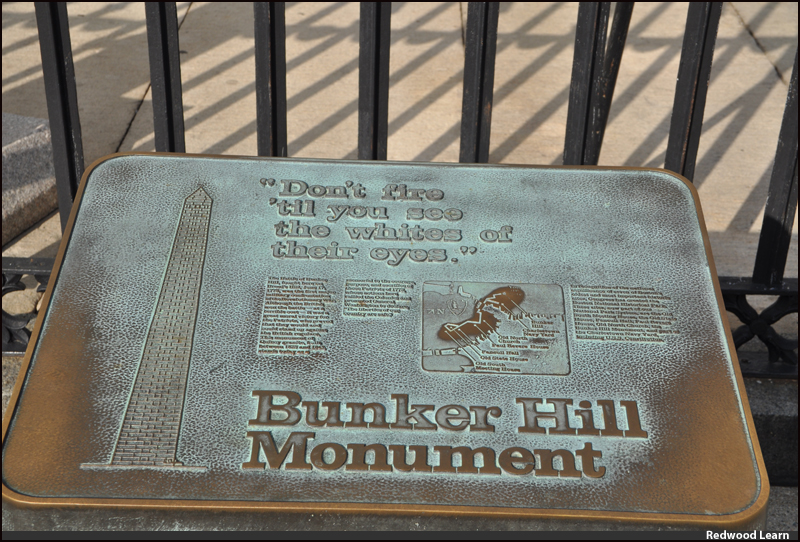
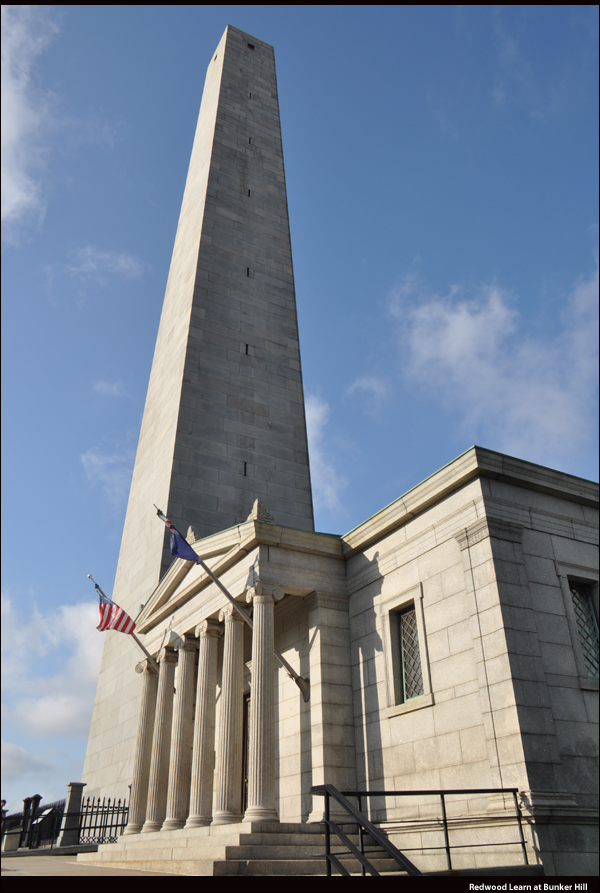
The Bunker Hill Monument in Boston, built in the early 1800s, is a site within the National Park Service. Although smaller, the obelisk is also the style used when the Washington Monument, dedicated in 1885, was constructed to honor George Washington.
12. March 1776: The American Patriots were in control of all Thirteen Colonies. Thomas Jefferson, a member of Virginia’s Committee of Correspondence and the Continental Congress, was asked to draft a document declaring independence from British rule.He stayed in a home near the Pennsylvania State House in Philadelphia to write the draft.
13. July 4, 1776: The Continental Congress adopted the Declaration of Independence in the Assembly Room at the Pennsylvania State House in Philadelphia (now Independence Hall). A total of 56 men eventually signed the document. The first public reading of the doucment took place outside in the square in front of the State House. The document declared each colony was independent and able to pass and enact their own laws.
As president of the Continental Congress, John Hancock was the first person to sign the Declaration of Independence. Just a little more than one year before, Hancock had been a key figure in the start of the Revolutionary War when British troops sought to disarm the Patriots at Lexinigton and Concord.
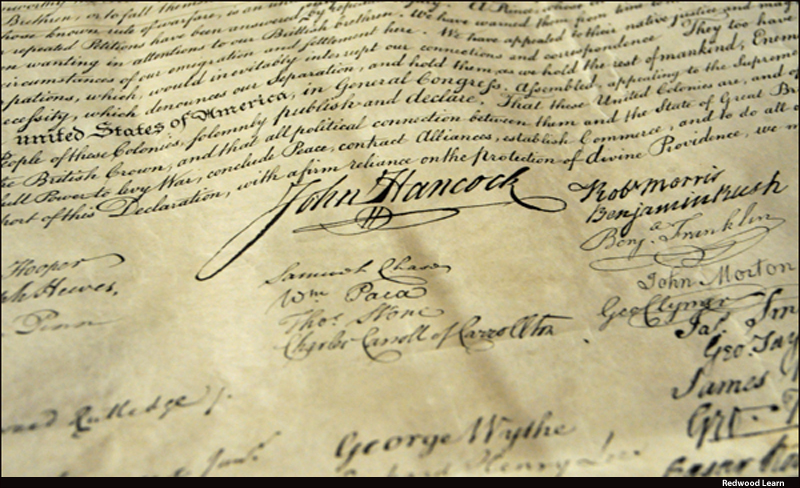
List of Grievances (Facts) as stated in the Declaration of Independence (Note: “He” refers to King George III, the King of England from 1760-1820)
There were a total of 27 Facts listed. Below are 10 of the 27.
1. For cutting off our Trade with all parts of the world:
2. For imposing Taxes on us without our Consent:
3. For depriving us in many cases, of the benefits of Trial by Jury:
4. For transporting us beyond Seas to be tried for pretended offences
5. For abolishing the free System of English Laws in a neighbouring Province, establishing therein an Arbitrary government, and enlarging its Boundaries so as to render it at once an example and fit instrument for introducing the same absolute rule into these Colonies:
6. For taking away our Charters, abolishing our most valuable Laws, and altering fundamentally the Forms of our Governments:
7. For suspending our own Legislatures, and declaring themselves invested with power to legislate for us in all cases whatsoever.
8. He [King George III] has abdicated Government here, by declaring us out of his Protection and waging War against us.
9. He has Word of the Day plundered our seas, ravaged our Coasts, burnt our towns, and destroyed the lives of our people.
10. He is at this time transporting large Armies of foreign Mercenaries to compleat the works of death, desolation and tyranny, already begun with circumstances of Cruelty & perfidy scarcely paralleled in the most barbarous ages, and totally unworthy the Head of a civilized nation.
For the full list of Facts, visit the National Archives through the link to the right.
REVIEW QUESTIONS
1. In what year did the Boston Tea Party occur?
2. In what year did the American Revolution begin?
3. In what year was the Declaration of Independence adopted?
4. What was the outcome of the American Revolution?
INQUIRY QUESTIONS
1. What was the main grievance some Amercan colonists had about being governed by King George III and the British Parliament?
2. Why do you think some colonists wanted to break free while others wanted to remain loyal to Britain?
3. What is the significance of July 4, 1776?
4. Find a pun in the story and discuss.