

June 18, 2021 – Abraham Lincoln entered the 19th century political fray because of a passionate belief that slavery in the United States had to be abolished. The nation could not be divided on the issue, he famously said in the first Lincoln-Douglas debate in 1858. Few people thought a man born in a log cabin in Kentucky could ascend to the highest office in the land. But he did. And he gave his life for his beliefs and his country.
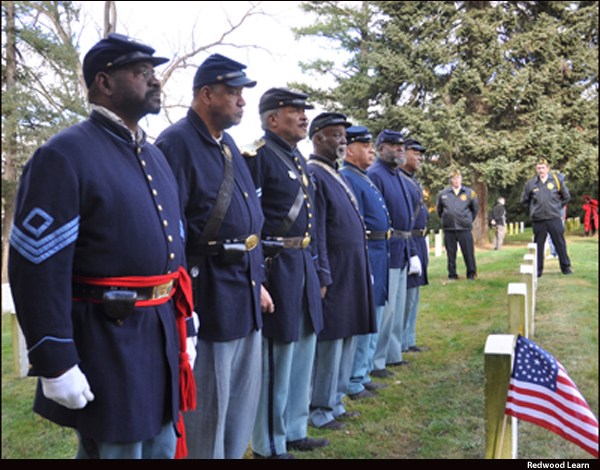
On Jan. 1, 1863, six months before the Battle of Gettysburg during the American Civil War, President Abraham Lincoln issued the Emancipation Proclamation. His proclamation declared all slaves in rebellious states were free. Thousands of freed slaves joined the Army of the Potomac – the Union Army.
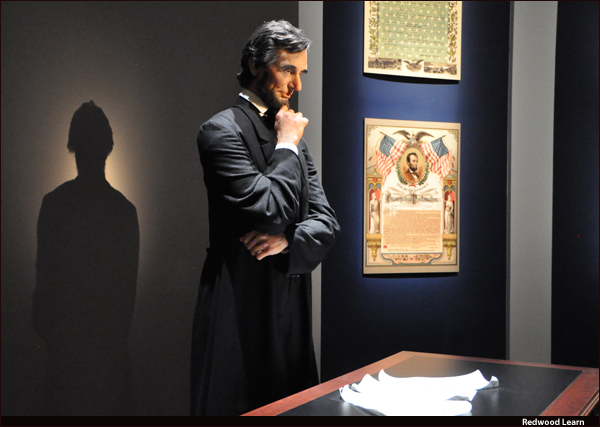
Galveston, Texas
It took more than two years for the proclamation to be known and enforced in Galveston, Texas. According to information from the Texas State Library and Archives Commission (TSLAC), on June 19, 1865, Union Major-General Gordon Granger read General Order No. 3 to the people of Galveston.
The order read:
“The people of Texas are informed that, in accordance with a proclamation from the Executive of the United States, all slaves are free. This involves an absolute equality of personal rights and rights of property between former masters and slaves, and the connection heretofore existing between them becomes that between employer and hired labor. The freedmen are advised to remain quietly at their present homes and work for wages. They are informed that they will not be allowed to collect at military posts and that they will not be supported in idleness either there or elsewhere.”
African Americans in Galveston began celebrating the anniversary one year later in 1866 as Emancipation Day. Activities included reading President Lincoln’s Emancipation Proclamation.
The anniversary, known both as Emancipation Day and Juneteenth, was celebrated off and on over the years in Texas and neighboring states.
In 1980, June 19 was celebrated for the first time in Texas as a legal state holiday – Emancipation Day – through passage of a bill by the Texas State Legislature. Its popularity has grown and is now celebrated nationwide as Juneteenth with picnics, parades and dancing.
President Lincoln’s legacy
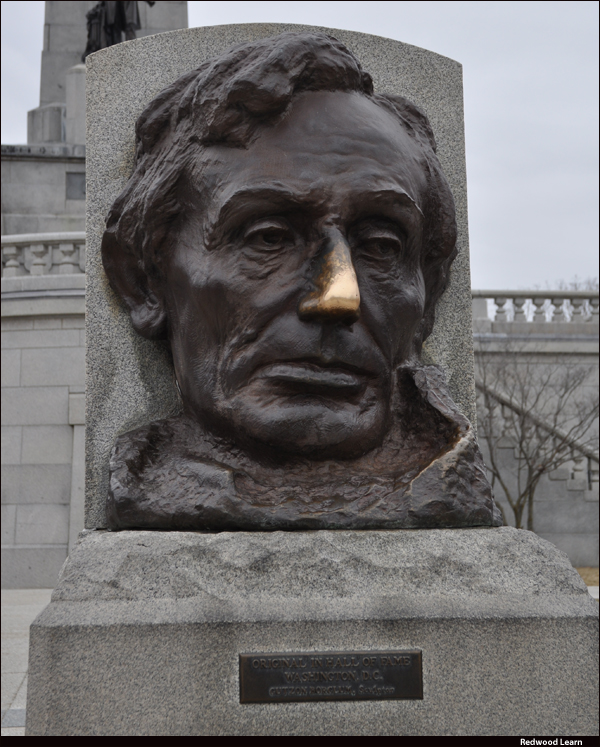
As soon as Abraham Lincoln won the 1860 presidential election, southern states began to secede from the Republic. They deeply opposed Lincoln’s abolitionist views. In December 1860, South Carolina was the first state to secede. Lincoln had not even been inaugurated. In those days, the U.S. Constitution stipulated presidents were to be inaugurated on March 4. So Lincoln had months to go before taking office when South Carolina seceded. (Note: The 20th Amendment to the Constitution, ratified in 1933, changed Inauguration Day for presidents to January 3.)
Other states followed. Mississippi, Alabama, Georgia, Louisiana, and Texas all seceded before Lincoln was inaugurated in March.
On April 12, 1861 when Lincoln had only been in office for about one month, the first shots of the American Civil War were fired at Fort Sumter in South Carolina. Many Americans believed the war would be over quickly. But it dragged on and on. Families were torn apart with relatives split between allegiance to the Union and to the Confederacy. They became enemies on the battlefield. Thousands of soldiers on both sides were killed in bloody battles at Bull Run in Manassas, Virginia; Antietam in Sharpsburg, Maryland; and in Gettsyburg, Pennsylvania.
On Sept. 22, 1862 following the Battle of Antietam (Sept. 17, 1862), President Lincoln issued a preliminary Emancipation Proclamation telling Confederate states he would free slaves in their states on Jan. 1, 1863 if the war was not over by that time.
The war did not end. On Jan. 1, 1863, President Lincoln issued the Emancipation Proclamation. According to the National Archives, the proclamation had limits. First, only slaves in states that had seceded were included. Second, it exempted states that had seceded but were now under Union control. And third, the proclamation depended on the Union winning the Civil War.
But it had a significant impact on the nation. The National Archives states:
“Although the Emancipation Proclamation did not end slavery in the nation, it captured the hearts and imagination of millions of Americans and fundamentally transformed the character of the war. After January 1, 1863, every advance of federal troops expanded the domain of freedom. Moreover, the Proclamation announced the acceptance of black men into the Union Army and Navy, enabling the liberated to become liberators. By the end of the war, almost 200,000 black soldiers and sailors had fought for the Union and freedom.”
Six months after President Lincoln signed the Emancipation Proclamation, the war dragged on. Confederate soldiers (Robert E. Lee’s Army of Northern Virginia) were pushing north. Supplies were dangerously low. They were looking for food around Gettysburg, Pennsylvania just before the Fourth of July holiday. Union soldiers discovered their position.
The Battle of Gettysburg was fought for three days (July 1-3, 1863) in the orchards and countryside around Gettysburg. About 50,000 soldiers were wounded or killed during the battle. On Nov. 19, 1863, President Lincoln came to Gettysburg to dedicate a national cemetery. His brief remarks are considered one of his best speeches – the Gettysburg Address.
The 1864 election occurred during the war. Lincoln was elected to a second term. He was inaugurated on March 4, 1865. His speech was brief. It’s also considered one of his best speeches.
After four years of bloodshed, the Civil War ended on April 9, 1865 in the village of Appomattox Court House, Virginia. Lee surrendered to Union Gen. Ulysses S. Grant.
According to information at the Abraham Lincoln Presidential Library and Museum in Springfield, Illinois, President Lincoln talked with visitors at the White House in the days after the surrender. He said that now that the war had ended, the nation should work to ensure freed slaves had the right to vote. John Wilkes Booth was in the audience at the White House.
On April 14, 1865, Lincoln was watching a play at Ford’s Theatre in Washington. Booth gained access to Lincoln’s private box and shot him in the back of the head. Lincoln was taken across the street to a house (the Petersen house) where he died the next morning.
REVIEW QUESTIONS
1. When did President Lincoln issue the preliminary Emancipation Proclamation?
2. What did the preliminary Emancipation Proclamation say to southern states that had seceded from the Union?
3. When was the final Emancipation Proclamation issued?
4. How was the Emancipation Proclamation finally known and enforced in Galveston, Texas?
5. What are the two names for the day that began in Galveston, Texas?
6. When did the state of Texas make June 19 a legal holiday?
7. When did the day become a federal holiday for the entire nation?
INQUIRY QUESTIONS
1. What effect do you think the Emancipation Prcolamation had on the Civil War?
2. What effect did Lincoln’s views on slavery have on his political career and his personal life?
3. President Llincoln’s entire presidency was consumed with holding the Union together. What personal stress do you think he endured during his first term of office as the Civil War raged?